

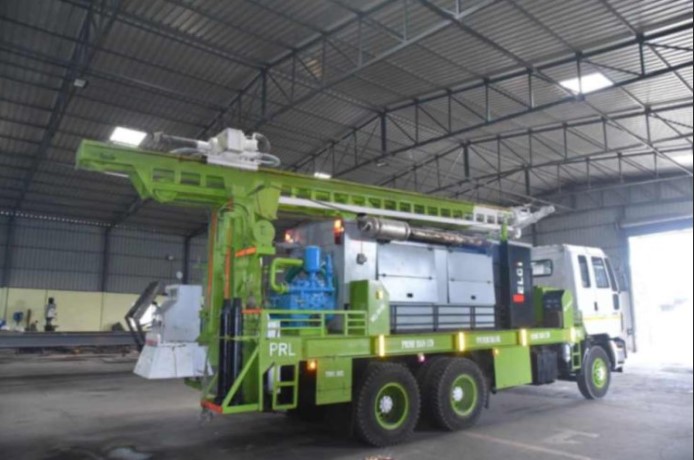
Industrial drilling rigs represent long-term capital assets that directly influence operational capability, project timelines, and service reliability. Contractors, infrastructure developers, and groundwater specialists rely on technically capable rigs to execute demanding drilling tasks across varied geological formations. Investment decisions in this segment are not purely transactional; they involve evaluating engineering reliability, field compatibility, and lifecycle efficiency. Financial planning also depends heavily on understanding the water drilling machine price, which reflects engineering complexity, depth capacity, automation integration, and structural durability rather than just surface-level specifications.
Engineering Design and Structural Integrity
The mechanical architecture of a drilling rig determines how effectively it performs under pressure-intensive conditions. Structural engineering must account for torque transfer efficiency, load stability, and vibration control during deep drilling operations.
High-strength steel frameworks, reinforced mast assemblies, and precision-machined rotary heads ensure that rigs maintain stability across uneven terrain. Structural rigidity reduces operational fatigue and prevents premature wear. Engineering precision also allows rigs to maintain alignment accuracy, which is critical for borehole consistency and depth precision. Modern rigs are designed to balance power delivery with structural resilience, allowing consistent operation without compromising safety or performance reliability.
Drilling Depth Capability and Geological Adaptability
Depth capacity is one of the most defining technical parameters when selecting drilling equipment. Different regions present diverse subsurface conditions, ranging from soft sediment layers to dense rock formations.
Rigs equipped with adaptable rotary systems and compatible hammer configurations provide flexibility across multiple geological profiles. Depth capability must be evaluated alongside torque output and pullback force to ensure efficient penetration without mechanical strain. Equipment that can maintain performance consistency across variable ground resistance ensures fewer operational interruptions and predictable project completion timelines.
Mobility and Deployment Flexibility
Operational environments vary significantly, from remote rural zones to confined industrial sites. Rig mobility determines how efficiently equipment can be transported, deployed, and repositioned between drilling locations.
Truck-mounted systems
Offer faster relocation across long distances and are suitable for projects requiring frequent movement between sites.
Crawler-mounted configurations
Provide superior stability on uneven, muddy, or inclined terrain where traction and balance are essential.
Compact hydraulic rigs
Allow access to restricted areas, supporting drilling in urban or infrastructure-sensitive environments.
Hydraulic Systems and Power Transmission Efficiency
Hydraulic engineering directly influences drilling speed, energy efficiency, and operational control. Advanced hydraulic systems ensure smooth power transmission between engine components and drilling assemblies.
Precision-controlled hydraulic circuits improve torque delivery, enhance penetration efficiency, and reduce mechanical stress. Efficient hydraulic systems also minimize fuel consumption while maintaining consistent operational output. Integrated control mechanisms allow operators to regulate drilling pressure, ensuring adaptability across varying geological resistance levels without compromising mechanical stability.
Final Thoughts on Making a Strategic Investment
Selecting industrial drilling rigs requires balancing engineering quality, operational adaptability, and long-term performance sustainability. Investment decisions should prioritize structural durability, hydraulic efficiency, mobility flexibility, and maintenance accessibility rather than focusing solely on initial cost considerations. Equipment designed with robust engineering standards ensures reliable output, reduced downtime, and consistent performance across demanding environments.
Manufacturers with specialized engineering expertise, integrated production capabilities, and structured quality control processes consistently deliver equipment that meets industrial performance expectations. PRIME RIGS LIMITED reflects the characteristics associated with the best drill manufacturer, combining mechanical precision, structural reliability, and engineering-focused manufacturing to support demanding drilling applications across diverse operational conditions.